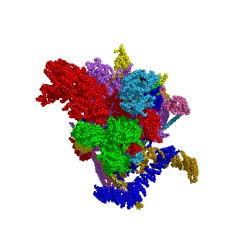
ZnF_C3H1zinc finger |
|---|
| SMART accession number: | SM00356 |
|---|---|
| Description: | - |
| Interpro abstract (IPR000571): | Zinc finger (Znf) domains are relatively small protein motifs which contain multiple finger-like protrusions that make tandem contacts with their target molecule. Some of these domains bind zinc, but many do not; instead binding other metals such as iron, or no metal at all. For example, some family members form salt bridges to stabilise the finger-like folds. They were first identified as a DNA-binding motif in transcription factor TFIIIA from Xenopus laevis (African clawed frog), however they are now recognised to bind DNA, RNA, protein and/or lipid substrates [ (PUBMED:10529348) (PUBMED:15963892) (PUBMED:15718139) (PUBMED:17210253) (PUBMED:12665246) ]. Their binding properties depend on the amino acid sequence of the finger domains and of the linker between fingers, as well as on the higher-order structures and the number of fingers. Znf domains are often found in clusters, where fingers can have different binding specificities. There are many superfamilies of Znf motifs, varying in both sequence and structure. They display considerable versatility in binding modes, even between members of the same class (e.g. some bind DNA, others protein), suggesting that Znf motifs are stable scaffolds that have evolved specialised functions. For example, Znf-containing proteins function in gene transcription, translation, mRNA trafficking, cytoskeleton organisation, epithelial development, cell adhesion, protein folding, chromatin remodelling and zinc sensing, to name but a few [ (PUBMED:11179890) ]. Zinc-binding motifs are stable structures, and they rarely undergo conformational changes upon binding their target. This entry represents C-x8-C-x5-C-x3-H (CCCH) type Zinc finger (Znf) domains. Proteins containing CCCH Znf domains include Znf proteins from eukaryotes involved in cell cycle or growth phase-related regulation, e.g. human TIS11B (butyrate response factor 1), a probable regulatory protein involved in regulating the response to growth factors, and the mouse TTP growth factor-inducible nuclear protein, which has the same function. The mouse TTP protein is induced by growth factors. Another protein containing this domain is the human splicing factor U2AF 35kDa subunit, which plays a critical role in both constitutive and enhancer-dependent splicing by mediating essential protein-protein interactions and protein-RNA interactions required for 3' splice site selection. It has been shown that different CCCH-type Znf proteins interact with the 3'-untranslated region of various mRNA [ (PUBMED:9703499) (PUBMED:10330172) ]. This type of Znf is very often present in two copies. |
| GO function: | metal ion binding (GO:0046872) |
| Family alignment: |
There are 102008 ZnF_C3H1 domains in 41916 proteins in SMART's nrdb database.
Click on the following links for more information.
- Evolution (species in which this domain is found)
- Literature (relevant references for this domain)
- Structure (3D structures containing this domain)
- Links (links to other resources describing this domain)