DUSPDomain in ubiquitin-specific proteases. |
|---|
| SMART accession number: | SM00695 |
|---|---|
| Description: | - |
| Interpro abstract (IPR006615): | Deubiquitinating enzymes (DUB) form a large family of cysteine protease that can deconjugate ubiquitin or ubiquitin-like proteins from ubiquitin-conjugated proteins. All DUBs contain a catalytic domain surrounded by one or more subdomains, some of which contribute to target recognition. The ~120-residue DUSP (domain present in ubiquitin-specific proteases) domain is one of these specific subdomains. Single or tandem DUSP domains are located both N- and C-terminal to the ubiquitin carboxyl-terminal hydrolase catalytic core domain [ (PUBMED:16298993) ]. The DUSP domain displays a tripod-like AB3 fold with a three-helix bundle and a three-stranded anti-parallel beta-sheet resembling the legs and seat of the tripod. Conserved residues are predominantly involved in hydrophobic packing interactions within the three alpha-helices. The most conserved DUSP residues, forming the PGPI motif, are flanked by two long loops that vary both in length and sequence. The PGPI motif packs against the three-helix bundle and is highly ordered [ (PUBMED:16298993) ]. The function of the DUSP domain is unknown but it may play a role in protein/protein interaction or substrate recognition. This domain is associated with ubiquitin carboxyl-terminal hydrolase family 2 ( IPR001394 MEROPS peptidase family C19). They are a family 100 to 200kDa peptides which includes the Ubp1 ubiquitin peptidase from yeast; others include:
|
| GO function: | thiol-dependent ubiquitin-specific protease activity (GO:0004843) |
| Family alignment: |
There are 5789 DUSP domains in 4820 proteins in SMART's nrdb database.
Click on the following links for more information.
- Evolution (species in which this domain is found)
- Cellular role (predicted cellular role)
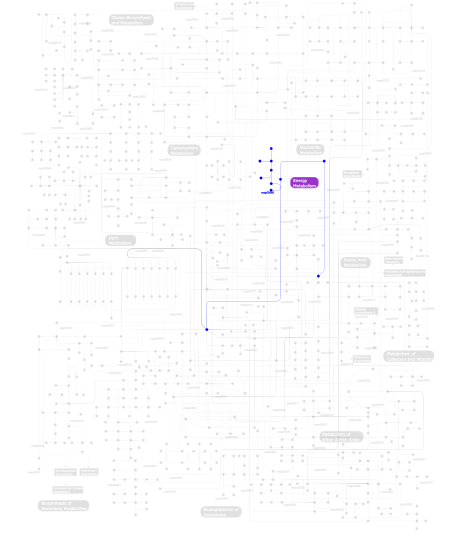
- Metabolism (metabolic pathways involving proteins which contain this domain)
- Structure (3D structures containing this domain)
- Links (links to other resources describing this domain)