PKS_PPPhosphopantetheine attachment site |
|---|
| SMART accession number: | SM00823 |
|---|---|
| Description: | Phosphopantetheine (or pantetheine 4' phosphate) is the prosthetic group of acyl carrier proteins (ACP) in some multienzyme complexes where it serves as a 'swinging arm' for the attachment of activated fatty acid and amino-acid groups (PUBMED:5321311). |
| Interpro abstract (IPR020806): | Phosphopantetheine (or pantetheine 4' phosphate) is the prosthetic group of acyl carrier proteins (ACP) in some multienzyme complexes where it serves as a 'swinging arm' for the attachment of activated fatty acid and amino-acid groups [ (PUBMED:5321311) ]. The amino-terminal region of the ACP proteins is well defined and consists of alpha four helices arranged in a right-handed bundle held together by interhelical hydrophobic interactions. The Asp-Ser-Leu (DSL) motif is conserved in all of the ACP sequences, and the 4'-PP prosthetic group is covalently linked via a phosphodiester bond to the serine residue. The DSL sequence is present at the amino terminus of helix II, a domain of the protein referred to as the recognition helix and which is responsible for the interaction of ACPs with the enzymes of type II fatty acid synthesis [ (PUBMED:11825906) ]. This entry represents the phosphopantetheine-binding domain from polyketide synthases. Polyketide synthases are large multidomain proteins involved in the synthesis of secondary metabolites [ (PUBMED:15958783) ]. |
| GO function: | phosphopantetheine binding (GO:0031177) |
| Family alignment: |
There are 98513 PKS_PP domains in 36236 proteins in SMART's nrdb database.
Click on the following links for more information.
- Evolution (species in which this domain is found)
- Cellular role (predicted cellular role)
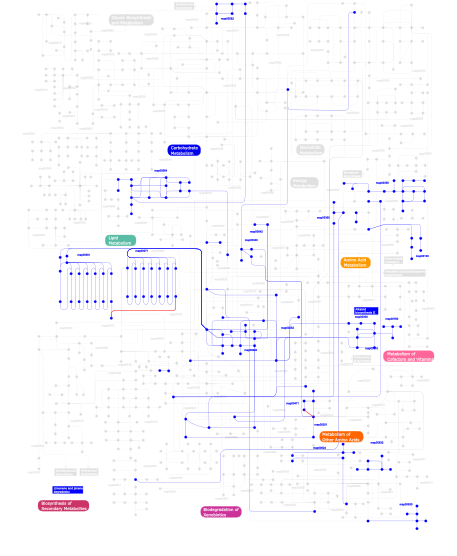
- Metabolism (metabolic pathways involving proteins which contain this domain)
- Structure (3D structures containing this domain)
- Links (links to other resources describing this domain)