
ShKTShK toxin domain |
 |
|---|
| SMART accession number: | SM00254
|
|---|
| Description: |
ShK toxin domain |
| Interpro abstract (IPR003582): |
The ShK toxin domain is found in metridin, a toxin from Metridium senile (brown sea anemone) and in ShK, a structurally defined polypeptide from the sea anemone Stoichactis helianthus (Stichodactyla helianthus) (Caribbean sea anemone). ShK is a powerful inhibitor of T lymphocyte voltage-gated potassium channels, in particular Kv1.3 [(PUBMED:10545177)]. It has been proposed that structural analogues may have use as an immunosuppressants for the prevention of graft rejection and for the treatment of autoimmune diseases [(PUBMED:9830012)]. The ShK toxin domain, is also found in one or more copies as a C-terminal domain in the metallopeptidases of Caenorhabditis elegans. The metallopeptidases belonging to MEROPS peptidase families: M10A, M12A and M14A. The majority belonging to M12A, the astacin/adamalysin family of metallopeptidases.
|
| Family alignment: |
|
|---|
There are 1315
ShKT domains in 668 proteins in SMART's nrdb database.
Click on the following links for more information.
- Evolution (species in which this domain is found)
-
- Literature (relevant references for this domain)
-
Primary literature is listed below; Automatically-derived, secondary literature is also avaliable.
- Rangaraju S et al.
- Potassium channel modulation by a toxin domain in matrix metalloprotease23.
- J Biol Chem. 2010; 285: 9124-36
- Display abstract
Peptide toxins found in a wide array of venoms block K(+) channels,causing profound physiological and pathological effects. Here we describethe first functional K(+) channel-blocking toxin domain in a mammalianprotein. MMP23 (matrix metalloprotease 23) contains a domain (MMP23(TxD))that is evolutionarily related to peptide toxins from sea anemones.MMP23(TxD) shows close structural similarity to the sea anemone toxins BgKand ShK. Moreover, this domain blocks K(+) channels in the nanomolar tolow micromolar range (Kv1.6 > Kv1.3 > Kv1.1 = Kv3.2 > Kv1.4, in decreasingorder of potency) while sparing other K(+) channels (Kv1.2, Kv1.5, Kv1.7,and KCa3.1). Full-length MMP23 suppresses K(+) channels by co-localizingwith and trapping MMP23(TxD)-sensitive channels in the ER. Our resultsprovide clues to the structure and function of the vast family of proteinsthat contain domains related to sea anemone toxins. Evolutionary pressureto maintain a channel-modulatory function may contribute to theconservation of this domain throughout the plant and animal kingdoms.
- Pan T, Groger H, Schmid V, Spring J
- A toxin homology domain in an astacin-like metalloproteinase of the jellyfish Podocoryne carnea with a dual role in digestion and development.
- Dev Genes Evol. 1998; 208: 259-66
- Display abstract
Metalloproteinases of the astacin family such as tolloid play major roles in animal morphogenesis. Cnidarians are thought to be evolutionary simple organisms and, therefore, a metalloproteinase from the marine hydrozoan Podocoryne carnea was analysed to evaluate the role of this conserved gene familiy at the base of animal evolution. Surprisingly, the proteinase domain of Podocornyne PMP1 is more similar to human meprin than to HMP1 from another hydrozoan, the freshwater polyp Hydra vulgaris. However, PMP1 and HMP1 both contain a small C-terminal domain with six cysteines that distinguishes them from other astacin-like molecules. Similar domains have been described only recently from sea anemone toxins specific for potassium channels. This toxin homology (Tox1) domain is clearly distinct from epidermal growth factor (EGF)-like domains or other cysteine-rich modules and terminates with the characteristic pattern CXXXCXXC with three out of six cysteines in the last eight residues of the protein. PMP1 is transiently expressed at various sites of morphogenetic activity during medusa bud development. In the adult medusa, however, expression is concentrated to the manubrium, the feeding organ, where the PMP1 gene is highly induced upon feeding. These disparate expression patterns suggest a dual role of PMP1 comparable to tolloid in development and, like astacin in the crayfish, also for food digestion. The Tox1 domain of PMP1 could serve as a toxin to keep the pray paralysed after ingestion, but as a sequence module such Tox1 domains with six cysteines are neither restricted to cnidarians nor to toxins.
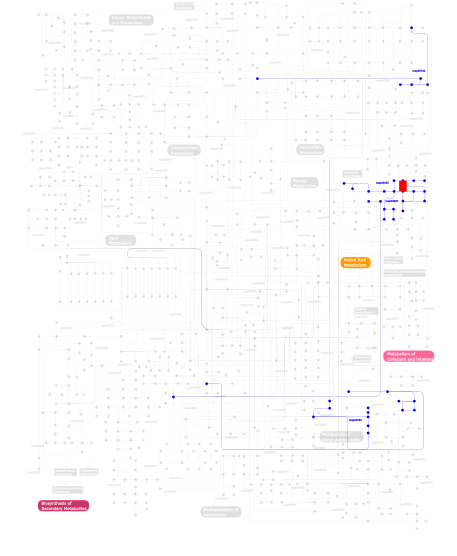
- Metabolism (metabolic pathways involving proteins which contain this domain)
-
- Structure (3D structures containing this domain)
3D Structures of ShKT domains in PDB
| PDB code | Main view | Title | | 1bei |  | Shk-dnp22: a potent kv1.3-specific immunosuppressive polypeptide, nmr, 20 structures |
| 1rc9 |  | Crystal structure of stecrisp, a member of crisp family from trimeresurus stejnegeri refined at 1.6 angstroms resolution: structual relationship of the two domains |
| 1roo |  | Nmr solution structure of shk toxin, nmr, 20 structures |
| 1wvr |  | Crystal structure of a crisp family ca-channel blocker derived from snake venom |
| 1xta |  | Crystal structure of natrin, a snake venom crisp from taiwan cobra (naja atra) |
| 1xx5 |  | Crystal structure of natrin from naja atra snake venom |
| 2giz |  | Structural and functional analysis of natrin, a member of crisp-3 family blocks a variety of ion channels |
| 2k9e |  | Nmr solution structure for shk-192: a potent kv1.3-specific immunosuppressive polypeptide |
- Links (links to other resources describing this domain)
-